
Picture this: you’ve launched your store, orders are rolling in, and you’re packing with a smile—until the invoice arrives. Extra shipping fees. Or a product that rattled in transit. The usual culprit? Incorrect box dimensions.
Good news: measuring a box is simple, repeatable, and wildly valuable. Do it right and you’ll reduce DIM-weight surprises, avoid product damage, and streamline fulfillment across DTC, Amazon FBA/FBM, and 3PL workflows.
Common Measurement Mistakes (and why they hurt)
- Mixing internal vs. external size: suppliers often quote inside dimensions for product fit; carriers charge by outside size. Confuse them and you pay, twice.
- Rushed notes & flipped numbers: writing 14×8×4 when you meant 14×4×8 wrecks inventory planning and freight calcs.
- Ignoring material thickness: corrugated walls (flute) eat interior space; relying only on outer size can cause “it doesn’t fit!” moments.
- Oversized ‘just in case’ cartons: carriers bill by volume—shipping air costs money and looks sloppy to customers.

Seven Packaging’s 7-Step Guide to Measure a Box Correctly
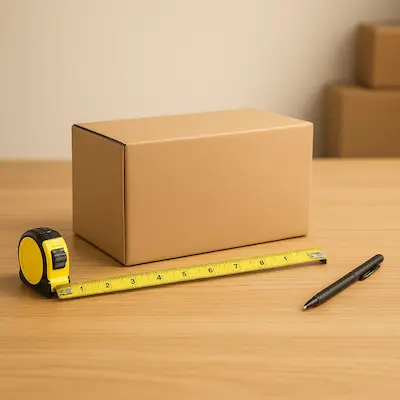
1) Prep Tools & Workspace
Use a reliable tape (or ruler), a flat surface, good lighting, and a clean spot to record L × W × H in the same unit (inches for most U.S. workflows).
Helpful references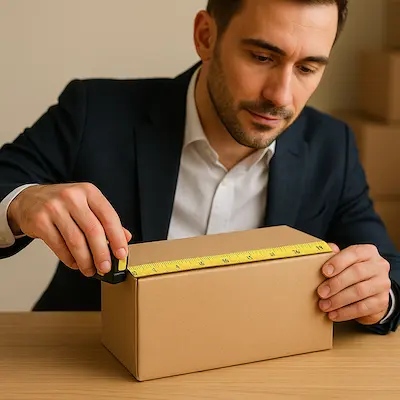
2) Measure Length (L)
Length is the longest side with a flap. Keep the tape straight and taut—no diagonal slack.

3) Measure Width (W)
Width is the shorter side with a flap, perpendicular to length. Measure edge to edge on the opening.
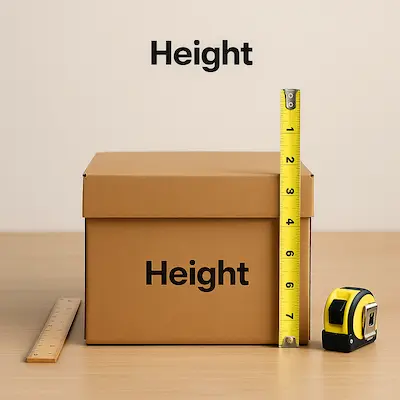
4) Measure Height (H)
Close flaps as if shipping and measure vertically from base to top. This is sometimes called depth.
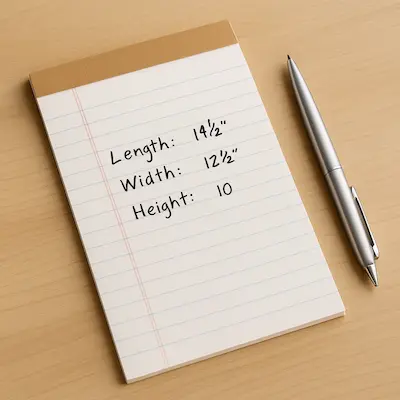
5) Record L × W × H (in order)
Always list Length × Width × Height. Consistent order avoids mix-ups and reships.
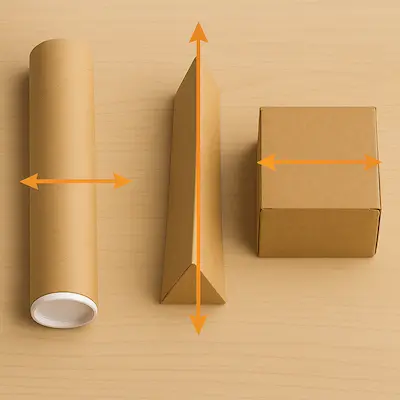
6) Account for Special Cases
For tubes/triangles or bulges, measure the widest and tallest points. For interior fit, measure inside dims and remember wall thickness & padding.
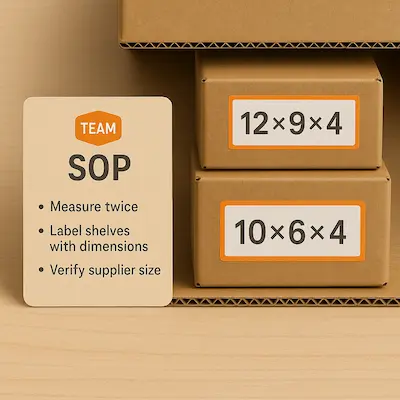
7) Standardize & Verify
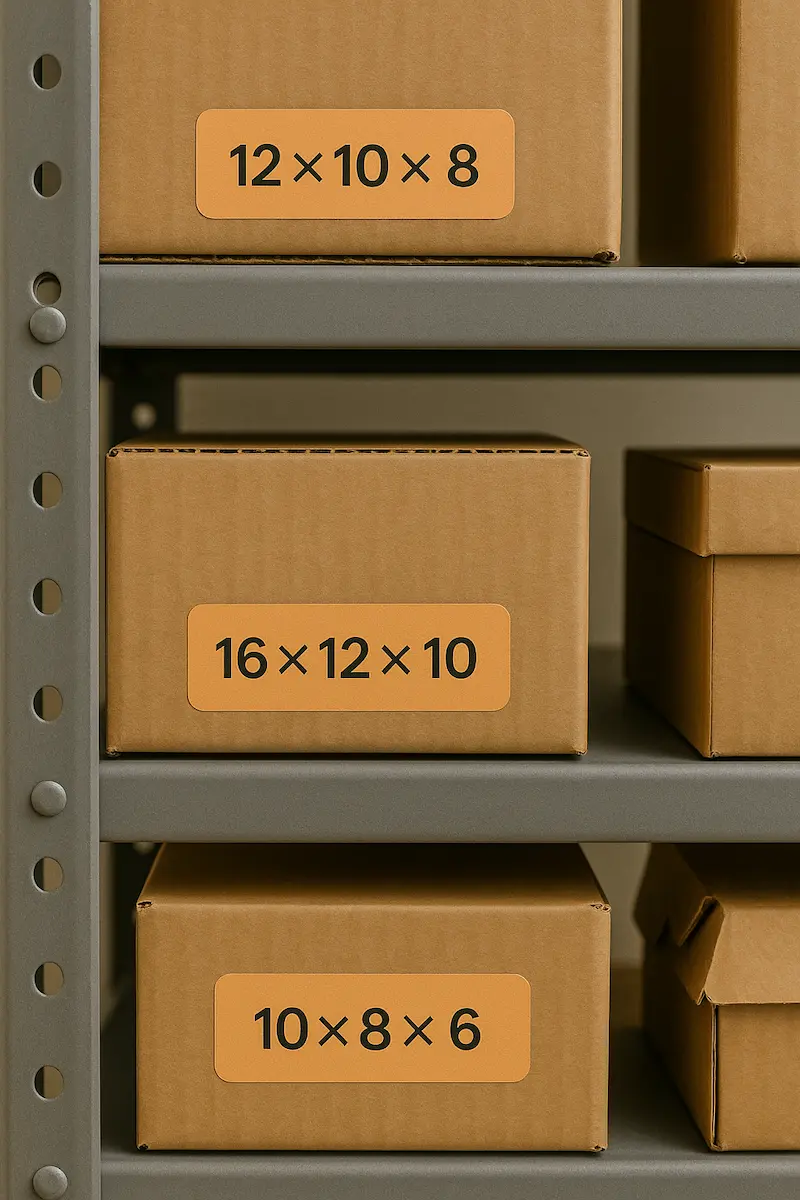
Turn this into an SOP. Label shelf stock with dimensions and spot-check new incoming cartons.
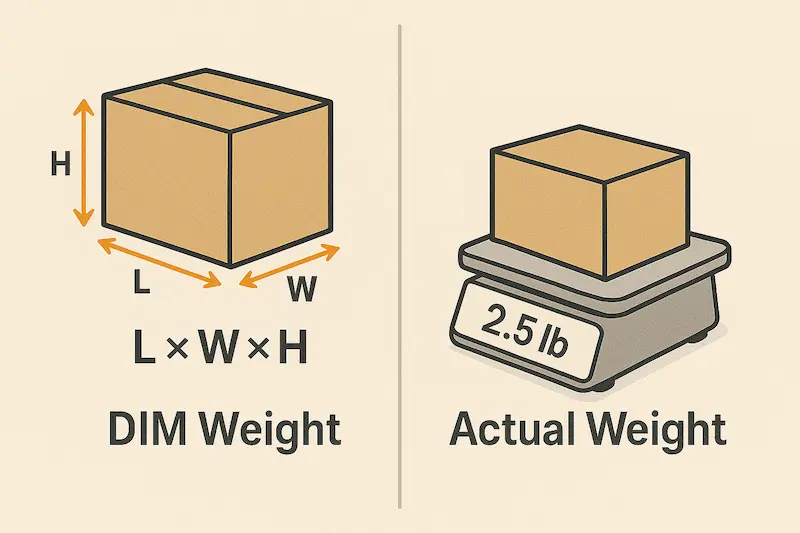
Why right-sizing matters (hello, DIM weight)
Major carriers often charge by the greater of actual weight vs dimensional (volume) weight. A slightly oversized carton can bump you into a higher billable weight. Accurate measurements and snug, protective packaging keep costs predictable and customers happy.
- Lower freight costs: Less “air shipping,” fewer surcharges.
- Fewer damages: Cushion properly in the smallest viable box.
- Premium unboxing: Neat fit feels intentional and professional.

Quick Reference — Do this every time
- Measure on a flat, stable surface with good lighting.
- Capture external size for shipping; internal size for product fit.
- Always record in L × W × H order, in the same unit (inches).
- Account for wall thickness and planned padding/inserts.
- Right-size to reduce dimensional weight and void fill.
- Make it an SOP—label shelves; verify incoming cartons.
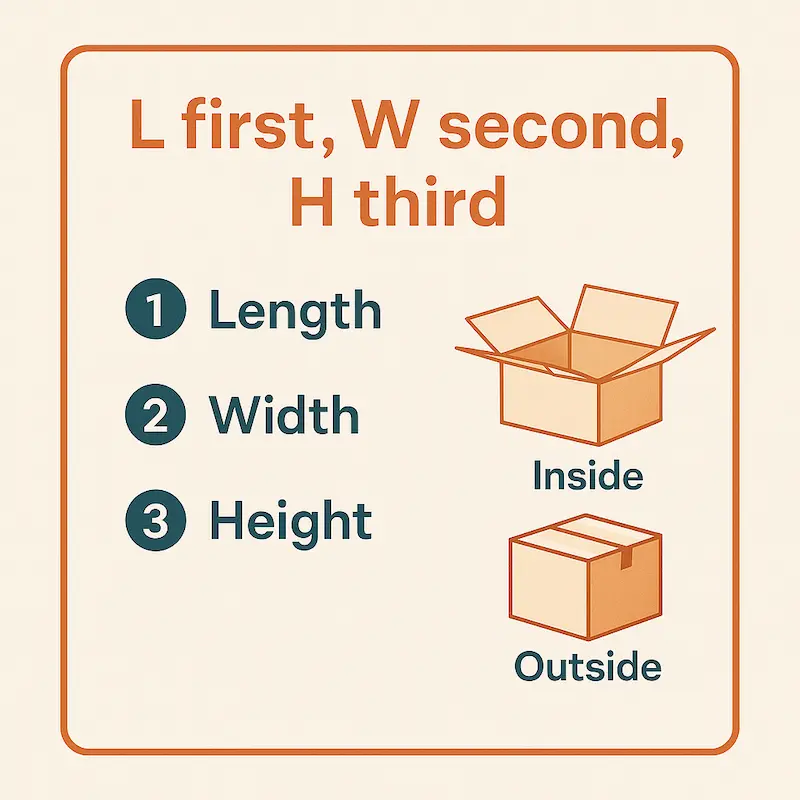
Ready to right-size your packaging?
If you want expert help picking the smallest safe box (and the right inserts) for lower DIM weight and beautiful unboxing, we’re here for you.
Get a Free Quote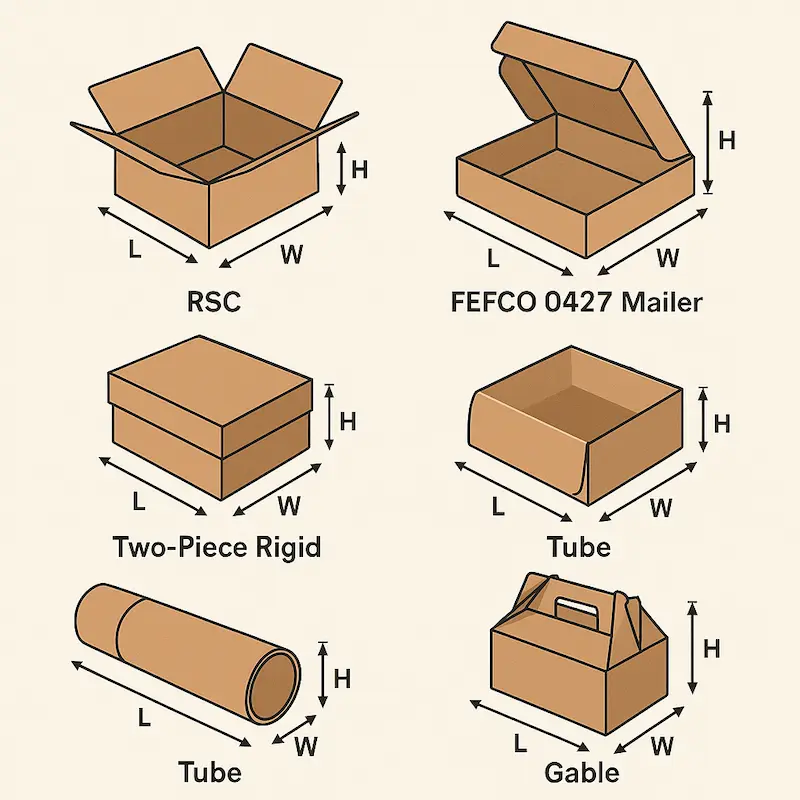
Visuals You Can Use

Bottom line: Accurate box measurements turn into smaller bills, fewer damages, and happier customers. Measure on a flat surface, capture L × W × H in order, and right-size your packaging. It’s the quiet win that compounds month after month.